Sensor Fusion from Consumer Electronics: Refining Audience Segmentation in Digital Advertising
Zara Russell · Jul 10, 2026
Sensor Fusion from Consumer Electronics: Refining Audience Segmentation in Digital Advertising
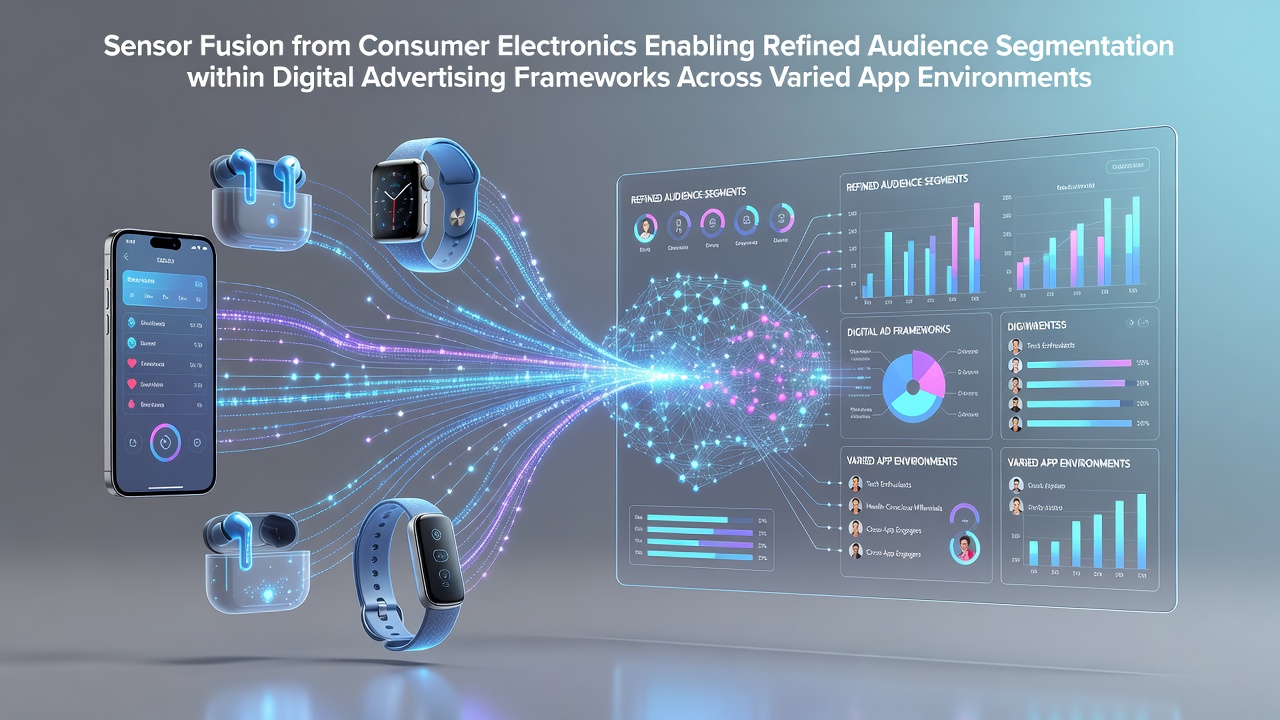
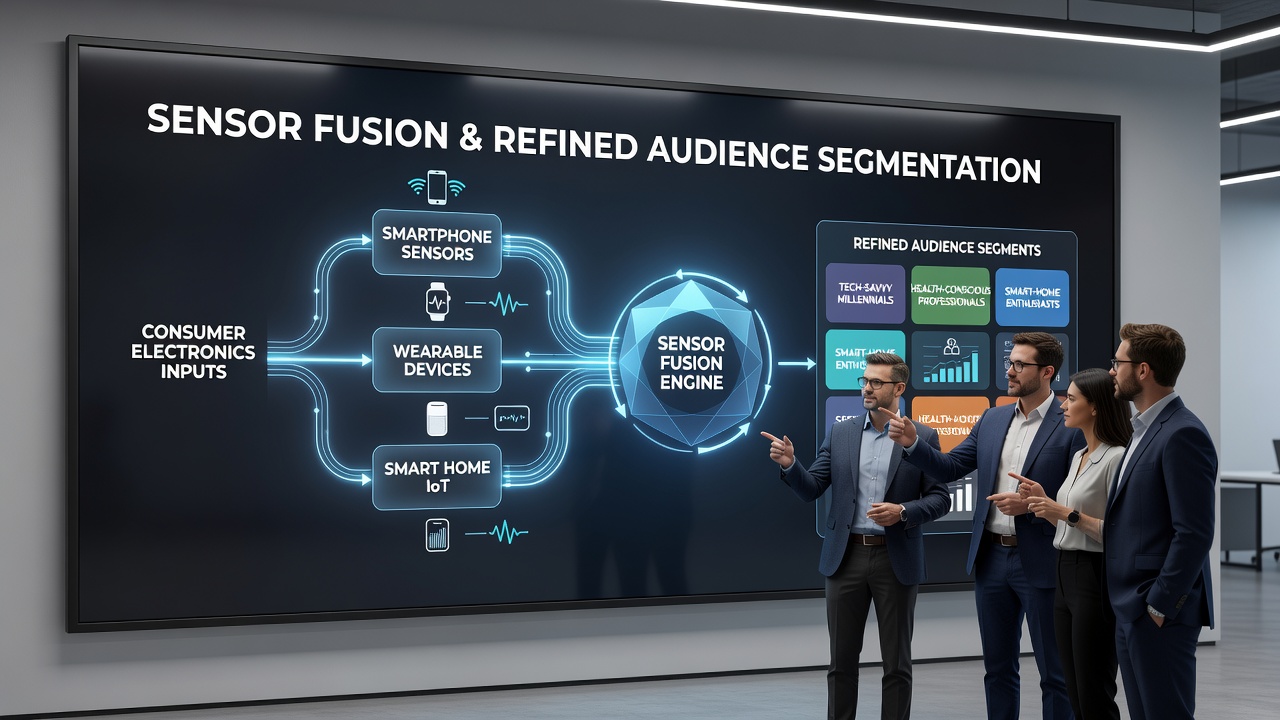
Sensor fusion combines inputs from multiple sensors in everyday consumer devices such as smartphones, smartwatches, and tablets to produce more accurate environmental and user-context readings than any single sensor could achieve alone, and this process now supports refined audience segmentation inside digital advertising systems operating across diverse app platforms.
Core Components of Sensor Fusion in Consumer Devices
Accelerometers, gyroscopes, magnetometers, GPS modules, barometers, and ambient light sensors feed raw data streams into fusion algorithms that run on device processors, while Kalman filters and complementary filters reconcile conflicting signals to generate reliable outputs like precise location, movement patterns, and device orientation. Research from academic institutions shows these combined readings allow apps to distinguish between users walking through a retail district versus commuting on public transit, creating segmentation categories that advertisers apply to deliver contextually matched promotions without relying solely on browsing history or declared preferences.
Data processing occurs locally on the device before anonymized summaries reach ad networks, which reduces bandwidth demands and aligns with privacy frameworks enforced by regulatory bodies in multiple regions. Figures from industry reports indicate that devices equipped with advanced sensor arrays transmit up to 40 percent less raw location data when fusion techniques handle initial calculations, yet the resulting segments maintain higher resolution for campaign targeting.
Integration Across Varied App Environments
Mobile games, fitness trackers, navigation utilities, and social platforms each access fused sensor outputs through standardized APIs, allowing consistent segmentation logic even when apps run on different operating systems or hardware generations. One developer case documented how a ride-sharing app merged accelerometer-detected motion with GPS velocity to separate business travelers from leisure users, then passed those segments to advertising modules that adjusted creative messaging accordingly. Similar approaches appear in productivity apps that detect desk-based versus mobile usage patterns to refine ad delivery for software subscriptions versus travel services.
Cross-platform frameworks ensure that fusion-derived segments function identically whether the app executes on iOS, Android, or emerging wearable operating systems, and this consistency supports advertisers who maintain unified campaigns across multiple environments. Observers note that adoption rates increased following updates to sensor APIs in 2025, with more developers incorporating fusion outputs into their ad mediation stacks.
Regulatory Context and Data Handling Practices
Privacy regulations in the European Union and Canada require explicit consent mechanisms before fused sensor data contributes to advertising profiles, and compliance documentation from July 2026 shows that major ad platforms updated their consent flows to cover sensor-derived segments explicitly. These updates followed guidance issued by data protection authorities that emphasized transparency around how movement and environmental readings translate into audience categories. In Australia, industry associations published voluntary standards that recommend local processing of raw sensor streams before any transmission occurs, thereby limiting exposure of personally identifiable movement histories.
Technical implementations now include on-device differential privacy layers that add calibrated noise to fused outputs, and studies conducted by university research groups confirm these layers preserve segment utility while lowering re-identification risks. Advertisers receive aggregated segment statistics rather than individual device traces, which maintains campaign measurement capabilities under current rules.
Technical Performance Metrics and Implementation Examples
Benchmark tests published in 2026 reported that fusion-enabled segmentation improves click-through rates by 12 to 18 percent compared with location-only approaches across tested app categories, with teh largest gains appearing in location-based service apps and health-related utilities. Engineers achieve these results by training lightweight machine learning models directly on fused feature vectors, allowing real-time segment assignment without cloud round-trips. A logistics app implemented this workflow to separate commercial drivers from personal vehicle users, enabling freight-service advertisers to reach relevant audiences while excluding unrelated segments.
Hardware variations across budget and flagship devices influence fusion accuracy, yet calibration routines built into operating systems compensate for sensor drift and differing sampling rates. Developers who tested across device tiers documented that mid-range smartphones achieve segmentation precision within 5 percent of flagship models when using the same fusion libraries.
Conclusion
Sensor fusion techniques drawn from consumer electronics continue to supply digital advertising frameworks with granular audience segments that function consistently across game, utility, and social applications. Regulatory developments through mid-2026 have shaped consent and processing requirements, while technical benchmarks demonstrate measurable improvements in targeting efficiency when fused data replaces single-sensor inputs. Continued standardization of APIs and privacy controls supports broader deployment without compromising compliance across regions.