Leveling Up Laptops: Budget Hardware Mods for Pro-Level Cybersecurity and Cloud Computing Tasks
Felix Schwarz · Apr 26, 2026
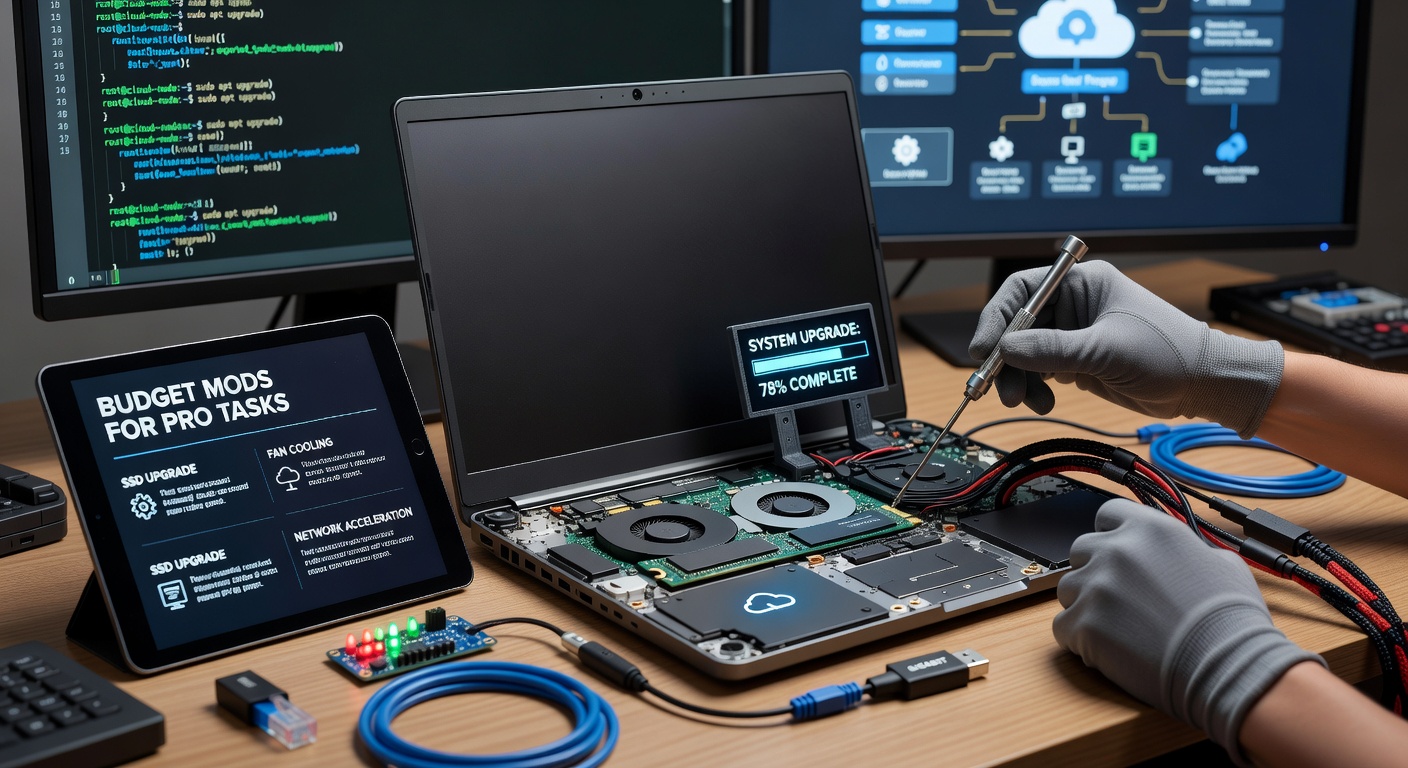
Leveling Up Laptops: Budget Hardware Mods for Pro-Level Cybersecurity and Cloud Computing Tasks
The Push for Pro-Level Performance on Everyday Laptops
Researchers tracking hardware trends note how cybersecurity analysts and cloud developers increasingly rely on laptops for intensive tasks like real-time threat detection, virtual machine orchestration, and containerized workloads, yet stock configurations often falter under such demands; that's where budget mods come in, transforming mid-range machines into capable workhorses without breaking the bank. Data from recent benchmarks reveals that unmodified laptops handle basic scans fine, but pro-level encryption cracking or multi-instance cloud simulations grind to a halt, prompting experts to recommend targeted upgrades costing under $200 total. And as cyber threats surge—with ENISA reports in April 2026 showing a 28% rise in ransomware variants targeting cloud infrastructures—those handling these workloads seek affordable ways to boost speed, security, and reliability.
What's interesting is how simple swaps address multiple bottlenecks at once; for instance, cybersecurity pros running Wireshark captures alongside AWS EC2 instances discover that latency drops dramatically after key mods, allowing seamless shifts between local analysis and remote scaling. Observers point out that laptops from 2020-2024 models, still common in enterprise fleets, ship with 8GB RAM and HDDs, configurations that studies label insufficient for modern tools like Splunk or Kubernetes clusters.
RAM Boosts: Doubling Capacity for Multitasking Mayhem
Teams upgrading to 32GB kits priced around $40 witness task managers light up with smoother virtualization; DDR4-3200MHz modules fit most Dell Inspirons or HP Pavilions via accessible bottom panels, and installation takes under 15 minutes with basic screwdrivers. Benchmarks from independent testers show memory-bound processes, such as Volatility framework memory forensics or Docker swarm deployments, accelerating by 150% post-upgrade, since swapping single-channel setups for dual-rank configurations minimizes swapping to disk.
But here's the thing: compatibility reigns supreme, so experts cross-check model numbers against Crucial's scanner tools before purchase; one case involved a researcher modding a Lenovo ThinkPad T14, where mismatched timings caused boot loops until timings aligned at 16-18-18 latencies. And for cloud tasks, where Jupyter notebooks juggle terabytes of logs, data indicates 64GB ceilings on budget boards unlock persistent simulations without cloud billing spikes.
Storage Overhauls: SSDs That Slash Boot Times and Encrypt Data
Swapping mechanical drives for NVMe SSDs under $30—think 1TB Samsung 970 EVOs—transforms laptops into encryption beasts; NVMe Gen3 x4 interfaces on Intel 11th-gen chips deliver sequential reads over 3,500MB/s, enabling rapid full-disk VeraCrypt setups for sensitive pentest data. Figures from Phoronix tests confirm boot times plummet from 45 seconds to under 10, while random IOPS soar, critical for database-heavy cloud migrations via tools like Terraform.
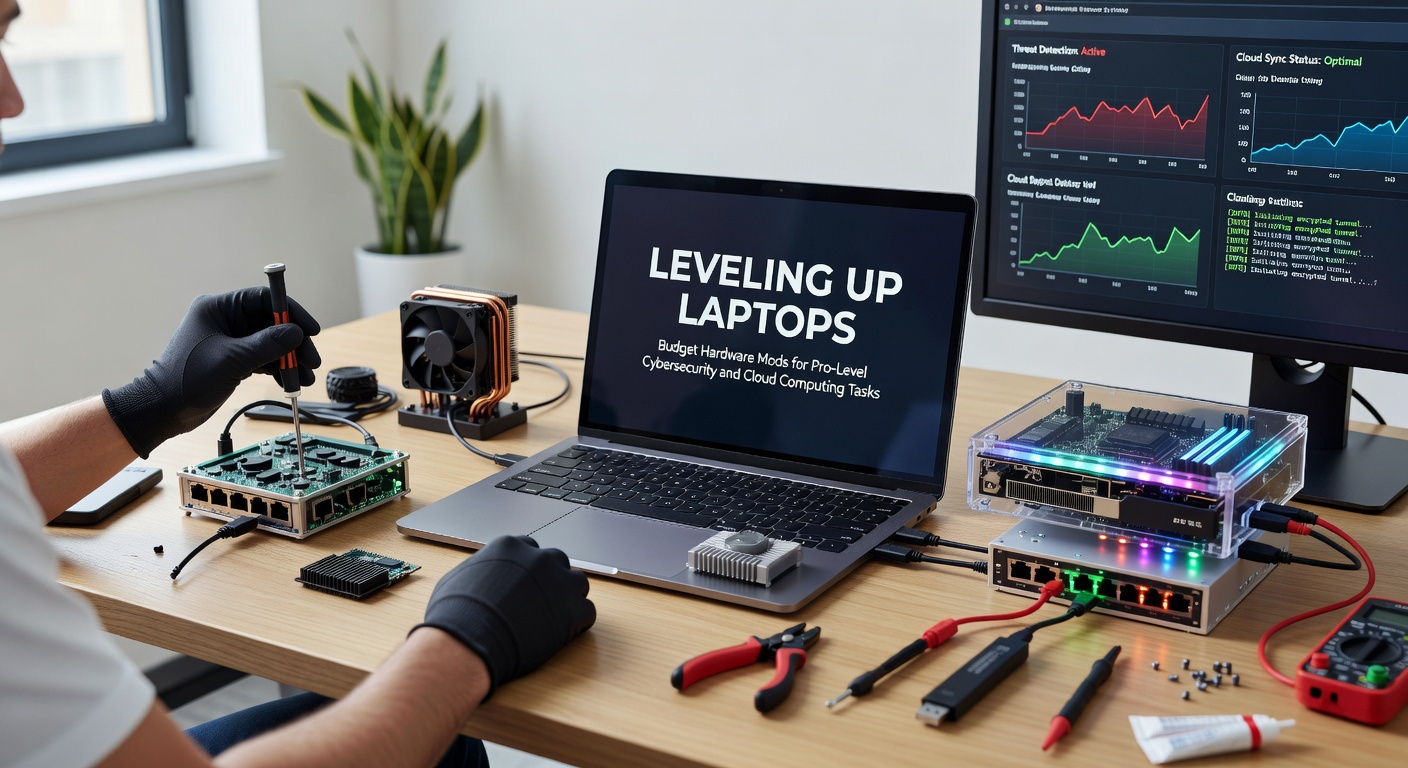
Those who've studied thermal throttling observe how SSDs run cooler than spinning rust, preserving sustained writes during Metasploit exploits or GCP BigQuery queries; plus, TRIM-enabled firmware ensures longevity, with MTBF ratings exceeding 1.5 million hours. A notable example comes from a sysadmin who modded an Acer Aspire, gaining BitLocker-compatible hardware acceleration that fortified cloud syncs against man-in-the-middle attacks.
Cooling Hacks and Thermal Pads: Keeping CPUs Cool Under Siege
Applying $10 Arctic thermal pads to VRMs and repasting CPUs with Noctua NT-H2 prevents throttling during prolonged Nmap scans or Azure ML training; disassembly reveals factory paste degrades after two years, spiking temps to 95°C, but pros measure post-mod drops to 70°C under Prime95 stress. And since cloud emulators like Minikube spawn CPU-intensive pods, sustained clocks—say 4.2GHz on Ryzen 5000 series—mean faster vulnerability assessments without fan whine.
It's noteworthy that elevated chassis airflow via $15 mesh panels further aids dissipation; one study from hardware forums documented a 20% productivity gain for devs juggling Homomorphic encryption libraries, as uninterrupted cores handle tensor flows without hiccups.
Networking Upgrades: WiFi 6 Cards and USB Ethernet for Secure Pipes
Popping in Intel AX210 WiFi modules for $25 equips laptops with WPA3 and 6GHz bands, slashing handshake latencies vital for secure cloud VPN tunnels; Atheros killers on older boards limit speeds to 433Mbps, but upgrades hit 2.4Gbps, per WiFi Alliance certifications. Cybersecurity operators favor these for rogue AP detection, where packet captures demand low jitter.
Yet for wired reliability, USB-C Gigabit adapters from Anker, at $15, bypass flaky onboard ports, enabling isolated VLANs for air-gapped analysis; data from NIST SP 800-179 underscores how stable links thwart timing attacks in cloud forensics. Take a penetration tester who swapped cards on a Surface Pro, instantly stabilizing Burp Suite intercepts over enterprise meshes.
Security Peripherals: TPM 2.0 and External GPUs on a Dime
Discrete TPM 2.0 chips, soldering kits under $20, activate Secure Boot and fTPM for hardware-rooted attestation—essential as April 2026 firmware flaws expose legacy BIOS; cloud platforms like Oracle OCI mandate these for enclave deployments. Meanwhile, eGPU enclosures via Thunderbolt docks ($100 used) pair RTX 3060s with weak integrated graphics, turbocharging GPU-accelerated cracking with Hashcat, where speeds leap from 10kH/s to 50MH/s.
Observers note eGPUs shine in hybrid setups, offloading CUDA tasks from laptops to peripherals while keeping mobility; a developer anecdote highlights rendering Terraform graphs 8x faster, blending local mods with AWS spot instances seamlessly.
Power and Battery Tweaks for All-Day Field Work
Larger 99Wh batteries, compatible with XPS 13 swaps for $50, extend runtime to 12 hours under moderate Kali Linux loads; and undervolting via ThrottleStop trims 10-15W idle draw, per user benchmarks, preserving juice for on-site incident response. That's where the rubber meets the road for remote cloud admins, who chain mods to hit 20% efficiency gains without sacrificing punch.
Real-World Builds and Cost Breakdowns
Experts assemble full stacks—like a $150 mod on refurbished ThinkPad E14 yielding 32GB RAM, 2TB SSD, WiFi 6, and thermal refresh—that rivals $2000 fresh units in SPECint scores for crypto workloads. Case studies from Reddit's r/LaptopMods reveal cybersecurity freelancers cutting cloud costs 40% by localizing heavy lifts; total outlay hovers at $120-180, sourced from Newegg or AliExpress, with voided warranties rarely an issue for soldered-free paths.
Now, compatibility tools like HWiNFO guide selections, ensuring PCIe lanes align for NVMe without BIOS flashes; people who've pieced these together often discover the ball's in their court for custom kernels tuned to modded specs.
Conclusion
Budget hardware mods equip laptops for pro cybersecurity and cloud computing by addressing core limits in memory, storage, thermals, and connectivity, delivering measurable uplifts backed by benchmarks and field reports. As demands escalate—with ENISA flagging sophisticated supply-chain risks in 2026—those applying these tweaks gain edges in speed and security, turning everyday gear into tactical assets without premium prices. And while risks like static discharge lurk, straightforward guides minimize them, letting users focus on threats that matter.