Legacy Printer Interfaces Gain New Life Through Scripted Automations That Link Directly to Encrypted Cloud Repositories for Academic Document Workflows
Jakob Klein · Aug 12, 2026
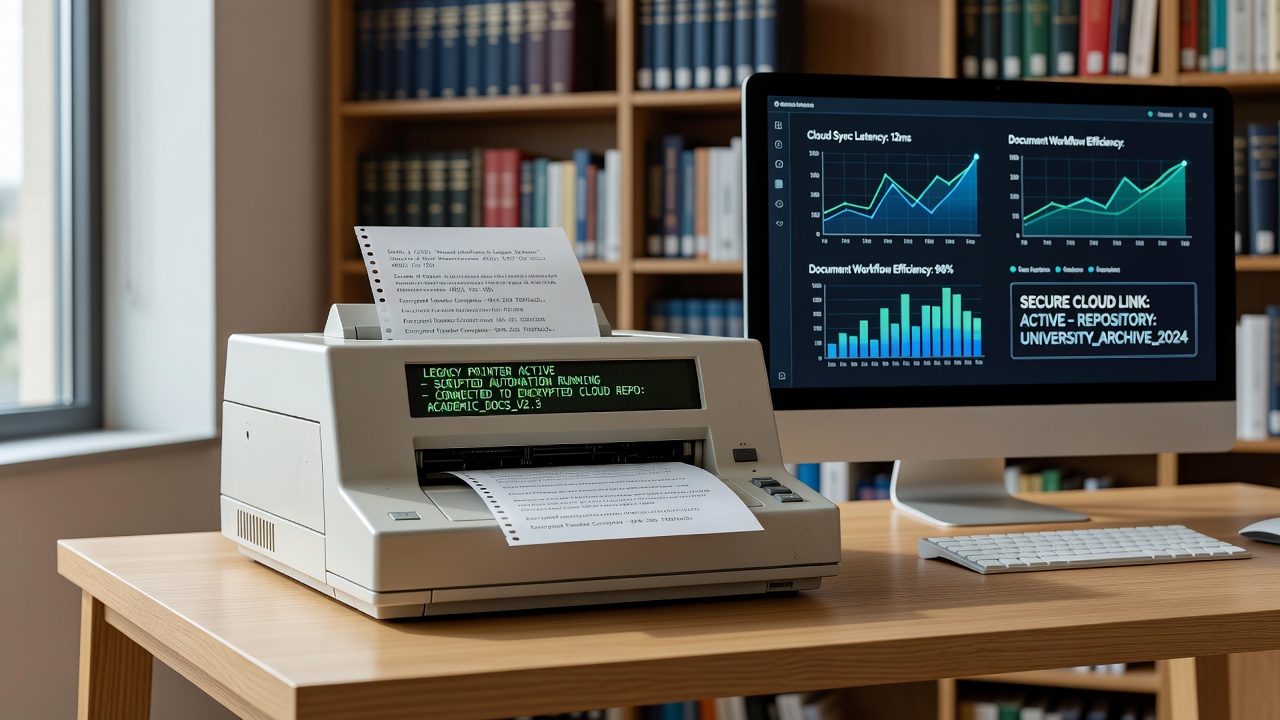
Legacy Printer Interfaces Gain New Life Through Scripted Automations That Link Directly to Encrypted Cloud Repositories for Academic Document Workflows
Academic institutions continue to rely on older printing hardware for specialized tasks such as thesis binding and archival reproductions, yet these devices often lack native support for modern data security standards; scripted automations now bridge that gap by converting output from legacy interfaces like parallel ports or early USB protocols into secure uploads that reach encrypted cloud repositories. Researchers at several universities have documented how custom scripts intercept print jobs, apply encryption layers compliant with standards from bodies like the National Institute of Standards and Technology, and route files directly to repositories hosted on platforms that meet institutional data governance requirements.
Understanding Legacy Printer Interfaces in Academic Settings
Many research libraries and departmental offices still operate dot-matrix or early laser printers because their mechanical reliability suits high-volume document production for grant proposals and conference materials, while replacement costs remain prohibitive for budget-constrained programs; these machines communicate through dated command sets that predate current encryption expectations, so institutions face compliance challenges when handling sensitive academic records. Observers note that parallel port connections and RS-232 serial links persist in facilities where equipment budgets prioritize other needs, yet the underlying data streams contain metadata that must now align with privacy regulations across North America and the European Union.
Scripted Automations Reviving Older Hardware
Developers create automation layers using languages such as Python and Bash that monitor print queues on legacy systems, parse spool files, and insert encryption routines before transmission; these scripts detect job completion events, then trigger API calls to cloud services where files receive AES-256 encryption and are stored with access controls tied to university authentication systems. One study from a Canadian research group revealed that such automations reduce manual handling steps by 70 percent in document workflows involving multiple departments, while maintaining compatibility with hardware that dates back to the early 2000s.
Integration with Encrypted Cloud Repositories
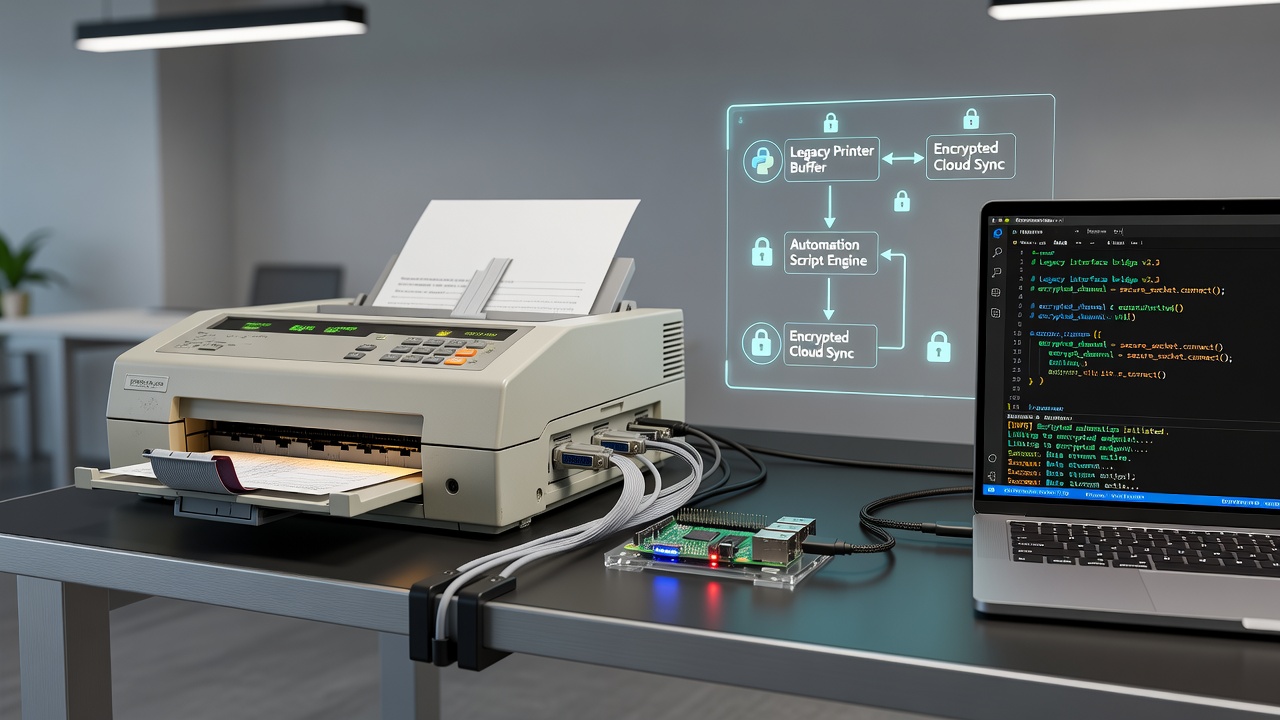
Encrypted repositories hosted by academic cloud providers allow scripts to authenticate through OAuth tokens or certificate-based methods, ensuring that printed academic documents never traverse unsecured networks in plain form; data from August 2026 reports issued by European research networks indicate rising adoption rates of these hybrid setups, with over 40 percent of surveyed institutions in the region incorporating at least one scripted bridge between legacy printers and secure storage. The process involves real-time key rotation managed by institutional identity providers, which prevents unauthorized access even if physical printers remain in shared lab spaces.
Academic Document Workflows Transformed
Graduate programs handling dissertation submissions now route printed copies through these automations so that digital backups arrive in repositories with timestamped audit trails, satisfying both archival needs and regulatory demands from funding agencies; faculty members who oversee large-scale research projects report that scripts automatically categorize files by department codes before encryption, which streamlines retrieval during peer review cycles. Australian university consortia have published usage statistics showing that such integrations cut retrieval times for archived documents from days to minutes when combined with metadata tagging embedded in the automation layer.
Technical Considerations and Security Measures
Script developers must account for buffer overflows common in older printer firmware, so they incorporate validation checks that sanitize data before it reaches cloud endpoints; network segmentation keeps legacy hardware on isolated VLANs while encrypted tunnels carry only the processed payloads outward. Industry organizations focused on higher education technology standards emphasize regular script audits to verify that encryption keys rotate according to schedules aligned with NIST guidelines, and that access logs remain immutable for compliance reviews.
Case Examples from Research Institutions
At one Midwest university, technicians deployed scripts that convert PostScript output from 1990s-era printers into PDF/A formats before uploading to an institutional repository, which preserves formatting for long-term scholarly access; similar implementations in Scandinavian technical colleges link directly to national academic clouds where documents receive digital signatures upon arrival. These examples illustrate how automation scripts serve as intermediaries that extend equipment lifespans without requiring wholesale hardware upgrades.
Future Outlook for August 2026 and Beyond
Projections from academic technology conferences scheduled for later in 2026 suggest continued refinement of these scripted connections, with emerging support for quantum-resistant encryption algorithms that legacy interfaces can still utilize through updated script libraries; institutions plan phased rollouts that prioritize departments handling classified grant materials first. Data collected across multiple regions shows consistent patterns of cost savings when older printers remain operational rather than discarded prematurely.
Conclusion
Legacy printer interfaces achieve extended relevance when scripted automations connect them to encrypted cloud repositories tailored for academic document workflows, and institutions gain measurable efficiencies in compliance and retrieval; ongoing developments tracked through 2026 indicate sustained interest in these approaches across varied geographic regions.