Adapting Smart Home Devices for Energy Efficiency Monitoring Through Custom Scripting Approaches
Felix Schwarz · May 31, 2026
Adapting Smart Home Devices for Energy Efficiency Monitoring Through Custom Scripting Approaches
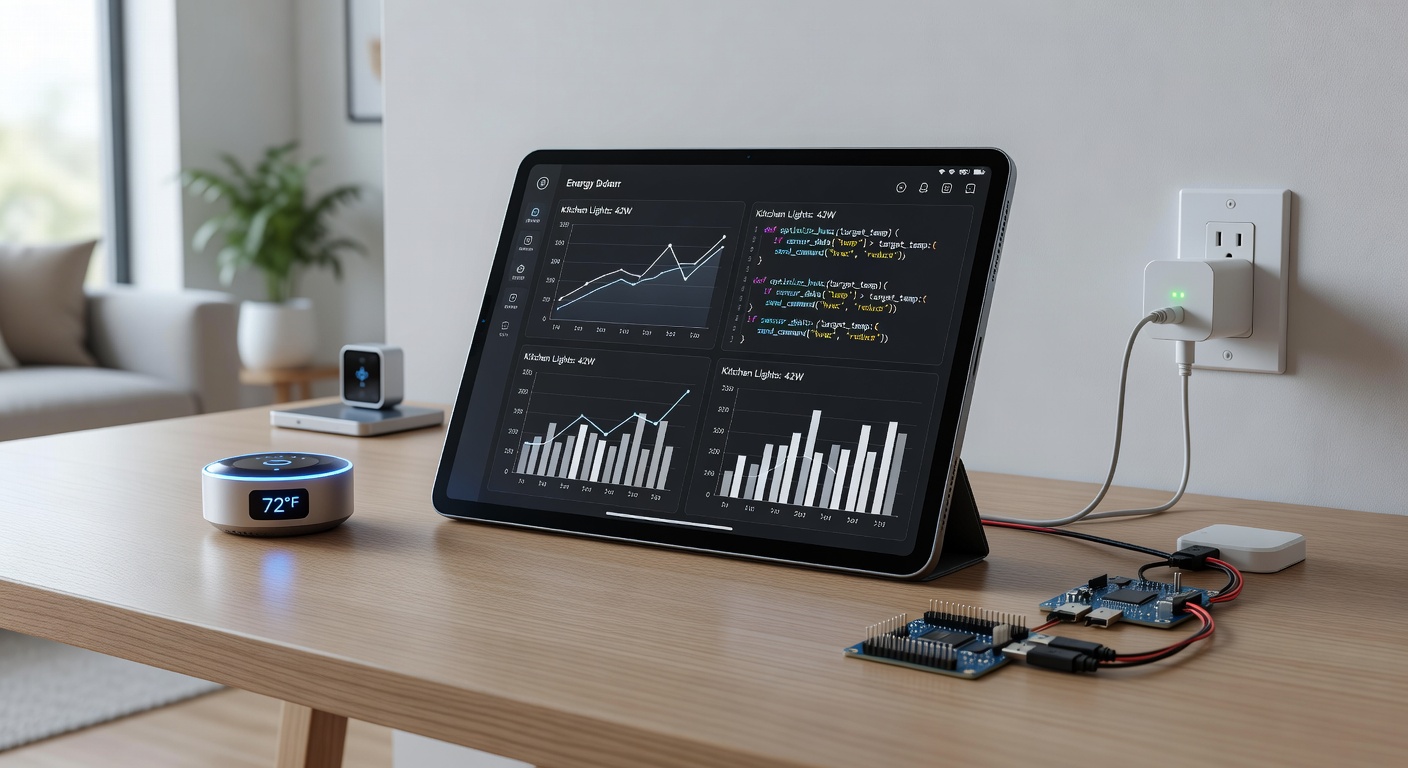
Smart home ecosystems now incorporate a range of sensors and actuators that track electricity consumption at the device level, and custom scripting turns these raw data streams into actionable monitoring systems. Devices such as Wi-Fi enabled plugs from manufacturers like TP-Link and Shelly, along with integrated thermostats from Ecobee and Nest, expose APIs that return real-time wattage readings. Observers note that scripting environments pull these values at regular intervals, store them in local databases, and generate usage reports without relying on cloud dashboards that often limit historical access.
Core Components in Device Ecosystems
Energy monitoring begins with hardware that measures current flow through individual circuits or appliances. Smart plugs report instantaneous power draw while whole-home meters such as the Emporia Vue transmit aggregated data over local networks. Researchers at institutions including the University of California have documented how these units achieve accuracy within two percent when calibrated against utility-grade equipment. Custom scripts then aggregate readings across multiple devices by polling each API endpoint, converting JSON responses into structured time-series records that users store on local servers or single-board computers.
Scripting Platforms and Languages
Home Assistant serves as a central hub where users write Python scripts or YAML automations that query device states every thirty seconds. Node-RED offers a visual alternative in which function nodes parse energy data and route it to InfluxDB for long-term storage. Those who prefer direct control often employ Python libraries such as pyShelly or the official Nest API wrapper to fetch metrics and apply filtering logic that removes noise from standby loads. Scripts frequently calculate daily totals, identify peak usage windows, and compare consumption against baselines derived from the previous thirty days of collected data.
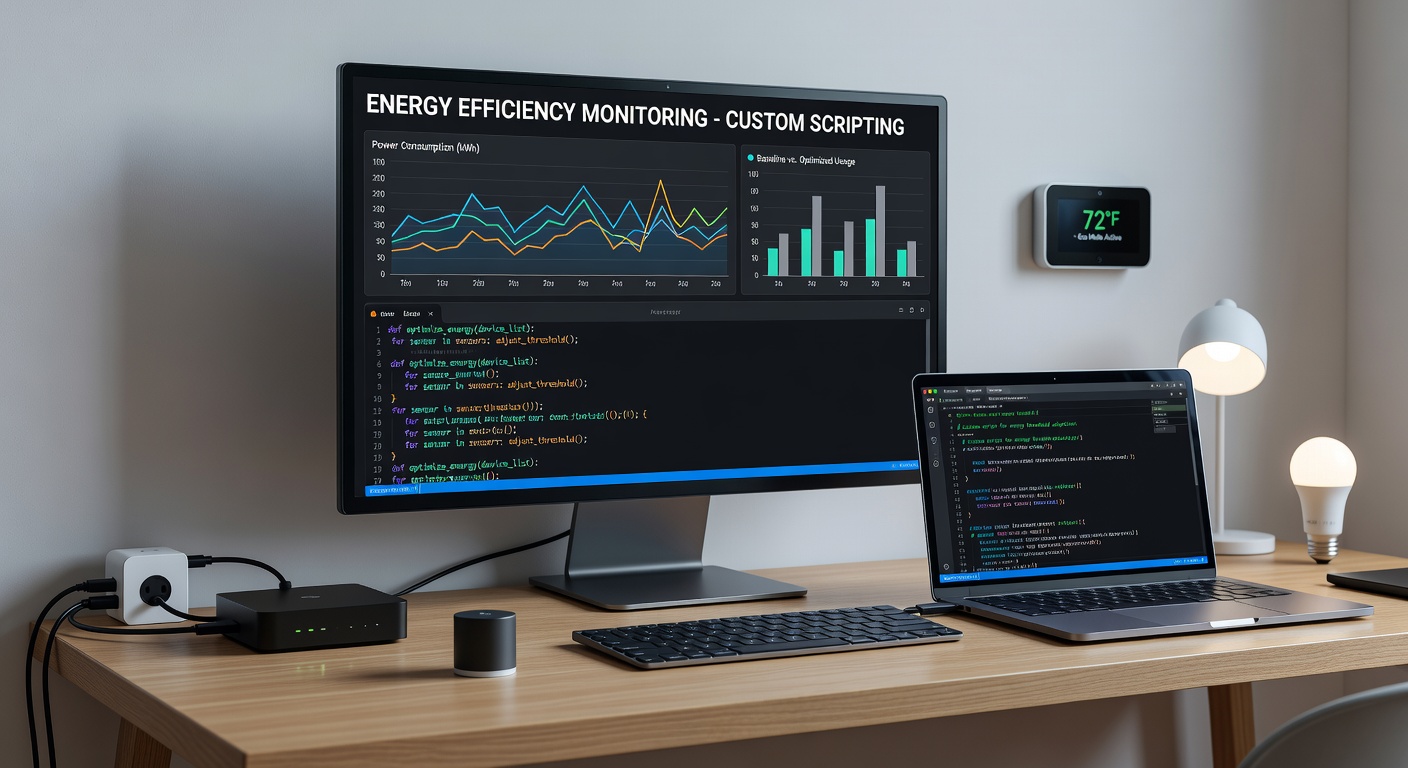
Integration with utility rate structures adds another layer. Scripts can pull time-of-use pricing schedules published by regional providers and overlay them onto consumption graphs to highlight cost spikes during evening hours. In May 2026 several North American utilities expanded API access to real-time pricing feeds, allowing scripts to trigger device shutdowns when rates exceed defined thresholds. European households meanwhile reference open data portals maintained by national grid operators that supply similar tariff information in machine-readable formats.
Implementation Patterns and Data Handling
One common pattern stores readings in a lightweight SQLite database before exporting summaries to Grafana dashboards. Another approach forwards sanitized data to external analytics services while keeping raw values on the local network. Scripts often incorporate error handling that retries failed API calls and logs connection drops so that gaps in the dataset remain visible. Conditional logic then activates based on thresholds: if a washing machine exceeds 1.5 kWh during off-peak periods the script sends a notification and optionally powers down secondary loads such as dehumidifiers through relay commands.
Regulatory Context and Broader Data Trends
According to figures published by the U.S. Department of Energy, residential electricity consumption accounts for roughly thirty-eight percent of total U.S. demand, with appliance standby power representing an increasing share. Parallel reports from the European Environment Agency track similar patterns across member states where smart metering rollouts have accelerated since 2024. Custom scripting allows households to supplement these official meters with finer-grained appliance-level visibility that regulatory programs do not yet mandate.
Security Considerations During Scripting
Local execution reduces exposure compared with third-party cloud services. Scripts run inside isolated containers or on dedicated Raspberry Pi units that communicate only over the home LAN. Network segmentation rules prevent monitoring scripts from reaching unrelated IoT cameras or voice assistants, while certificate pinning on API calls blocks man-in-the-middle attempts. Observers note that firmware updates for the underlying devices remain essential because manufacturers periodically alter authentication methods that break existing scripts.
Future Developments Expected by Mid-2026
Industry working groups continue to standardize energy reporting formats through bodies such as the Connectivity Standards Alliance. New Matter-compatible plugs scheduled for release in 2026 will expose additional attributes including power-factor and voltage, giving scripts richer datasets for efficiency calculations. Academic teams at institutions in Canada and Australia have already begun testing machine-learning models that ingest scripted energy logs to predict appliance failures weeks in advance, potentially extending equipment life while trimming unnecessary runtime.
Conclusion
Custom scripting transforms isolated smart-home sensors into cohesive energy-monitoring networks that deliver granular visibility and automated responses. By combining device APIs with local processing platforms, households capture consumption patterns that utility bills alone cannot reveal. Continued expansion of open data interfaces and hardware standards supports further refinement of these approaches through 2026 and beyond.